
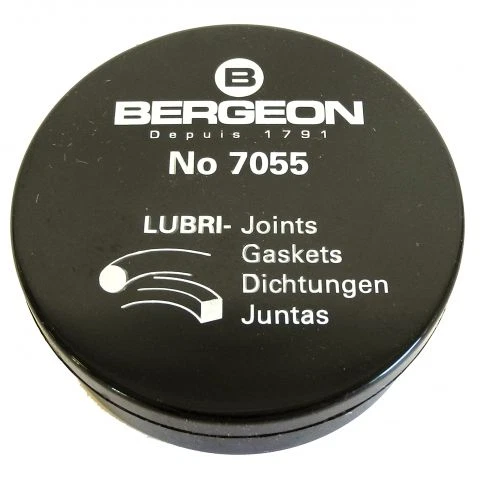
Case back gaskets do quiet work. They help the case back seat cleanly, reduce the chance of a dry gasket pinching, and make future opening less frustrating. A small amount of silicone grease is often enough, which is why a dedicated greaser is useful on a watch repair bench.
What gasket grease is for
Silicone gasket grease is used on rubber case back gaskets and some crown or tube seals where the watch design calls for a lubricated seal. It is not a general oil, and it should not be used on movement parts. The goal is simple: keep the gasket supple, help it sit evenly, and avoid dragging or twisting as the case back is closed.
When to use it
Use gasket grease when a rubber gasket has been removed for inspection, cleaning, or replacement and is going back into service. It is especially useful after opening a screw back case, changing a battery, or checking a case back seal. If the gasket is cracked, stretched, flat, or sticky, replace it rather than trying to rescue it with grease.
How a gasket greaser helps
A greaser lets you coat the gasket more evenly than applying grease with a fingertip or improvised tool. Place the gasket inside the greaser, close it, and rotate gently so the gasket picks up a light film. You should not see blobs of grease. Too much can attract dust, squeeze into the case, or make the job messier than it needs to be.
A simple bench routine
- Open the case carefully and remove the gasket without stretching it.
- Inspect the gasket under good light for cuts, flattening, or swelling.
- Clean the gasket groove before refitting the seal.
- Apply a light, even film with a proper greaser.
- Seat the gasket flat before closing the case back.
For the lubricant itself, see the watch oils and silicone range. For a bench tool made for this job, the Bergeon 7055 gasket grease and greaser is a tidy option that keeps the process controlled.
Common mistakes to avoid
Do not treat gasket grease as a substitute for pressure testing, water resistance testing, or a damaged seal. It also will not make a non-water-resistant watch safe around water. If water resistance matters, the watch should be tested with suitable equipment after the case is closed.
For home repairs, think of gasket grease as a small finishing step that supports a clean refit. It is not dramatic, but it is one of those bench habits that helps keep case work neat and repeatable.


